Sciatica refers to pain that radiates along the path of the sciatic nerve, which branches from your lower back through your hips and buttocks and down each leg. Typically, sciatica affects only one side of your body.
The two most common causes of sciatica, would be a disc herniation and piriformis syndrome.
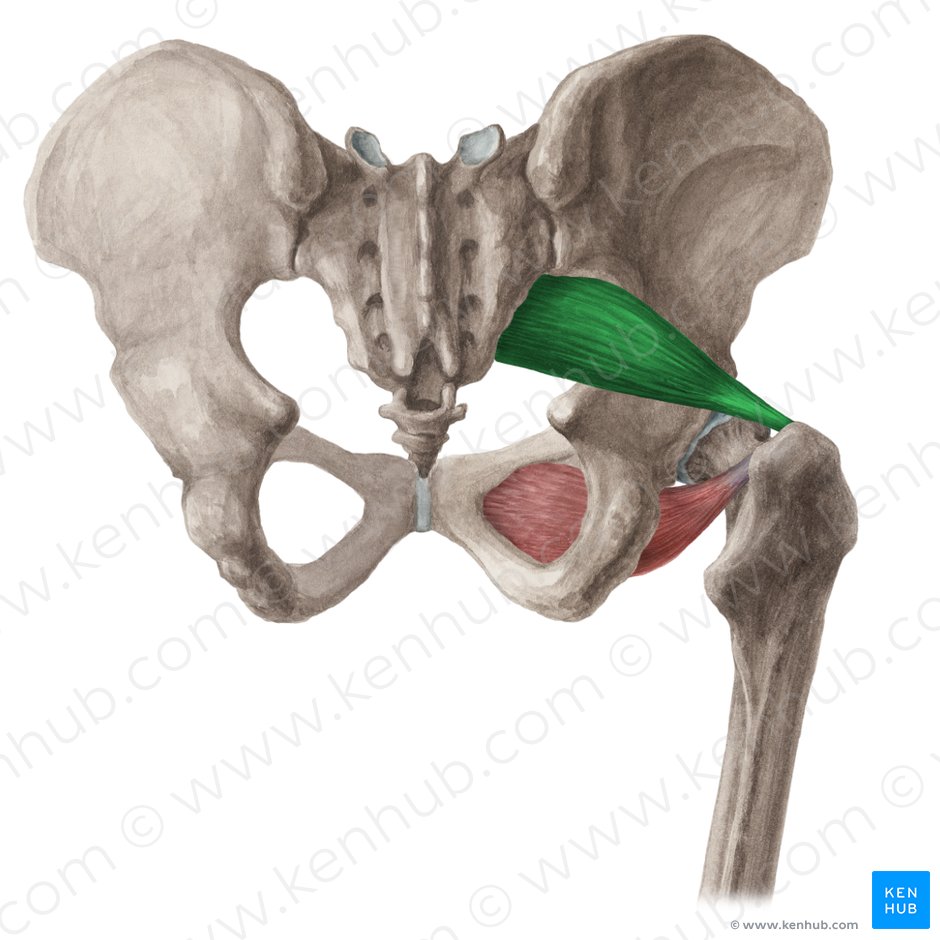
Anatomy of the Piriformis muscle and syndrome

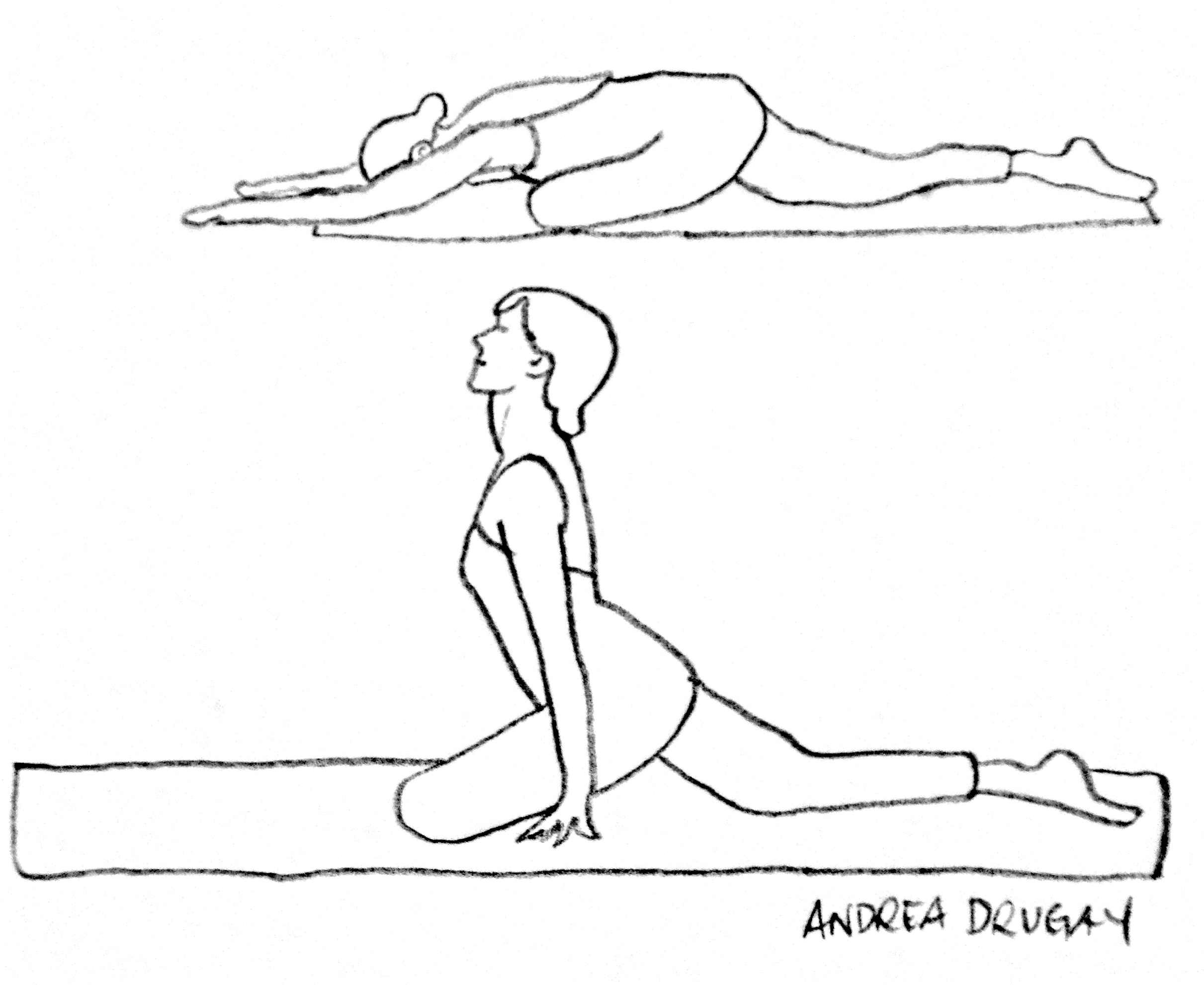
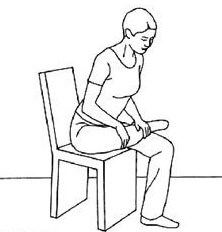
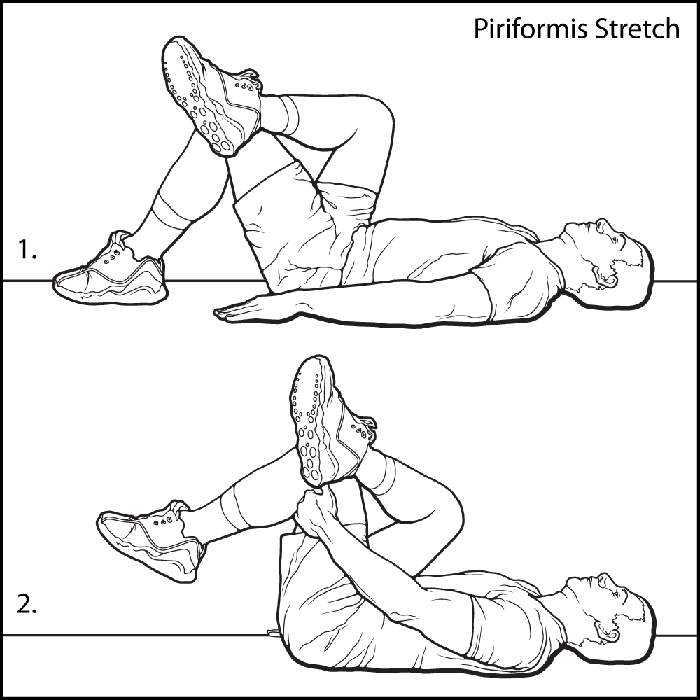
Stretching
Orthopedic Tests
Straight leg raise (SLR) test. This test includes the patient lying on his/her back and lifting one leg at a time with the other leg flat or bent at the knee. A pain encountered while lifting the affected leg usually indicates sciatica.
Hip Quadrant Test
Testing for: joint capsule tightness or hip pathology
Procedure:
- Patient is supine
- Therapist Flexes and adducts the patient’s affected hip, until there is some resistance
- Therapist maintain the resistance and moves the patient’s hip through an arc into abduction
Positive Sign: pain, early leathery end feel, crepitus in the movement
Pace Abduction Test
Testing for: the strength of the piriformis muscle
Procedure:
- Patient is seated, with their hips flexed 90 ° and their knees together
- Therapist places both hands on the lateral side of the knees , holding them together
- Patient attempts to move their knees apart while the therapist resists
Positive Sign: piriformis weakness if the patient cannot move their knees apart. Pain is present in the area of the piriformis indicates piriformis trigger points
Piriformis Length Test
Assessing For: the length of the piriformis muscle
Procedure:
- Patient is prone with their knees close together
- Patient flexes both their knees to 90°
- Slowly separate the lower legs away from the midline, while keeping the knees together (the internal rotation of the femur stretches both piriformis muscles)
- The normal internal rotation would be (45°-50°) from the midline
Positive Sign: short piriformis muscle is indicated if the internal rotation is less than 45°
Posterior SI Joint Provocation
Testing for: SI joint dysfunction
Procedure:
- Patient is sidelying on the unaffected side
- Therapist brings affected hip into flexion
- Therapist places one hand on the patient’s ASIS on the affected side, and therapist other hand on the ischial tuberosity on the same side
- Therapist attempts to posteriorly rotate the patient’s affected pelvis
Positive Sign: pain around the SI joint indicates SI joint dysfunction
SI joint Gapping Test
Purpose: to assess the integrity of the anterior ligaments of the SI joints
Procedure:
- Patient is supine
- Therapist applies a lateral and inferior pressure to the medial sides of the patient’s Anterior Superior Iliac Spines. (Therapist crosses their arm in order to push easier)
Positive Sign: anterior ligament sprain if there is Unilateral Gluteal or Posterior Leg
Straight Leg Raise
Purpose: To determine the cause of low back pain
Procedure:
- Patient is supine.
- Place their affected leg in adduction and internal rotation
- Raise the affected leg by grasping it around the heel and flexing the hip (their affected knee should be extended).
- Flex the hip until the patient feels pain (usually around 70-80 degrees of flexion)
- Slowly lower the leg until no pain is felt by the patient.
- Dorsiflex the patient’s affected foot (this stretches their sciatic nerve)
Positive Signs:
Hamstring Tightness – pain in the back of their thigh and knee during hip flexion
Lumbar or SI Joint Dysfunction – pain in the low back after 70 degrees of hip flexion only (no foot dorsiflexion)
Sciatic Nerve Involvement – pain down the leg during passive dorsiflexion
Space Occupying Lesion or Disc Herniation – pain down their opposite leg ( the one that is not raised
 Bryson Ingram R.M.T.